Different Methods of Carpet Making: From Traditional to Modern
Rugs are much more than just decorative objects; they often represent artisanal craftsmanship or modern techniques that influence their quality, durability, and aesthetics. Here is an overview of the main manufacturing methods, ranging from traditional hand-knotting to machine weaving and tufting.
The Hand-Knotted Rug
The making of a hand-knotted rug is an ancient, complex, and meticulous technique that produces pieces of very high quality, often considered works of art. Each knot is tied by hand, making each hand-knotted rug unique.
The first step is to choose the materials that will make up the rug. Wool is used for its durability, softness, and ability to retain colors.
The loom is the basic tool for creating a hand-knotted rug. On this loom, the warp threads—the vertical threads that form the rug's basic structure—are placed. Warp threads are usually made of cotton to provide stability and durability.
The rug's design is often drawn in advance, usually on a grid called a "cartoon." This grid details each knot and each color, serving as a guide for the craftsman.
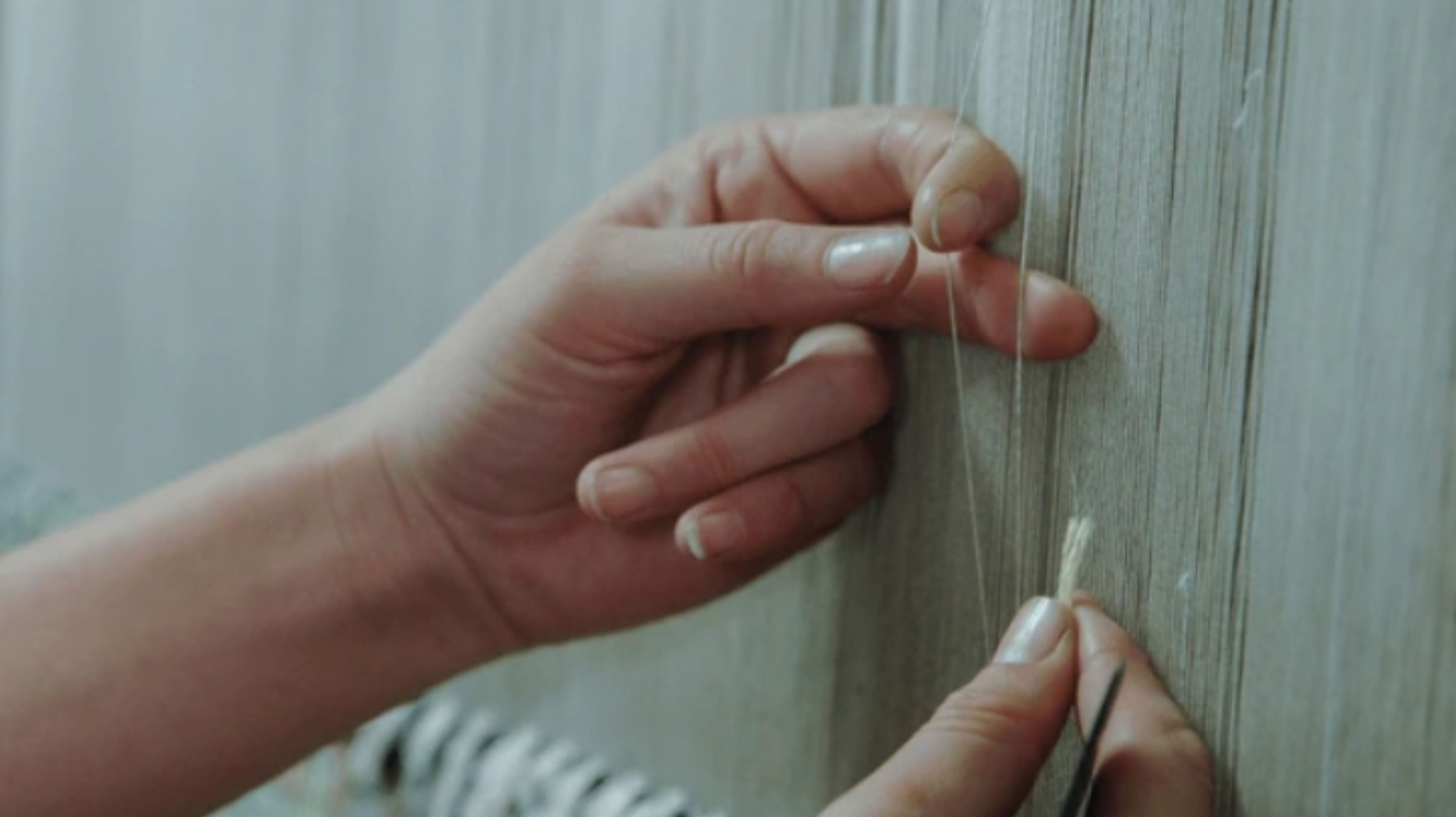
The craftsman makes each knot by wrapping a wool or silk thread around two warp threads before tightening the knot.
The number of knots per square meter (called "knot density") determines the fineness of the rug. The more knots, the denser, more durable, and more detailed the rug will be. This process is extremely meticulous, and a large rug can take months to complete.

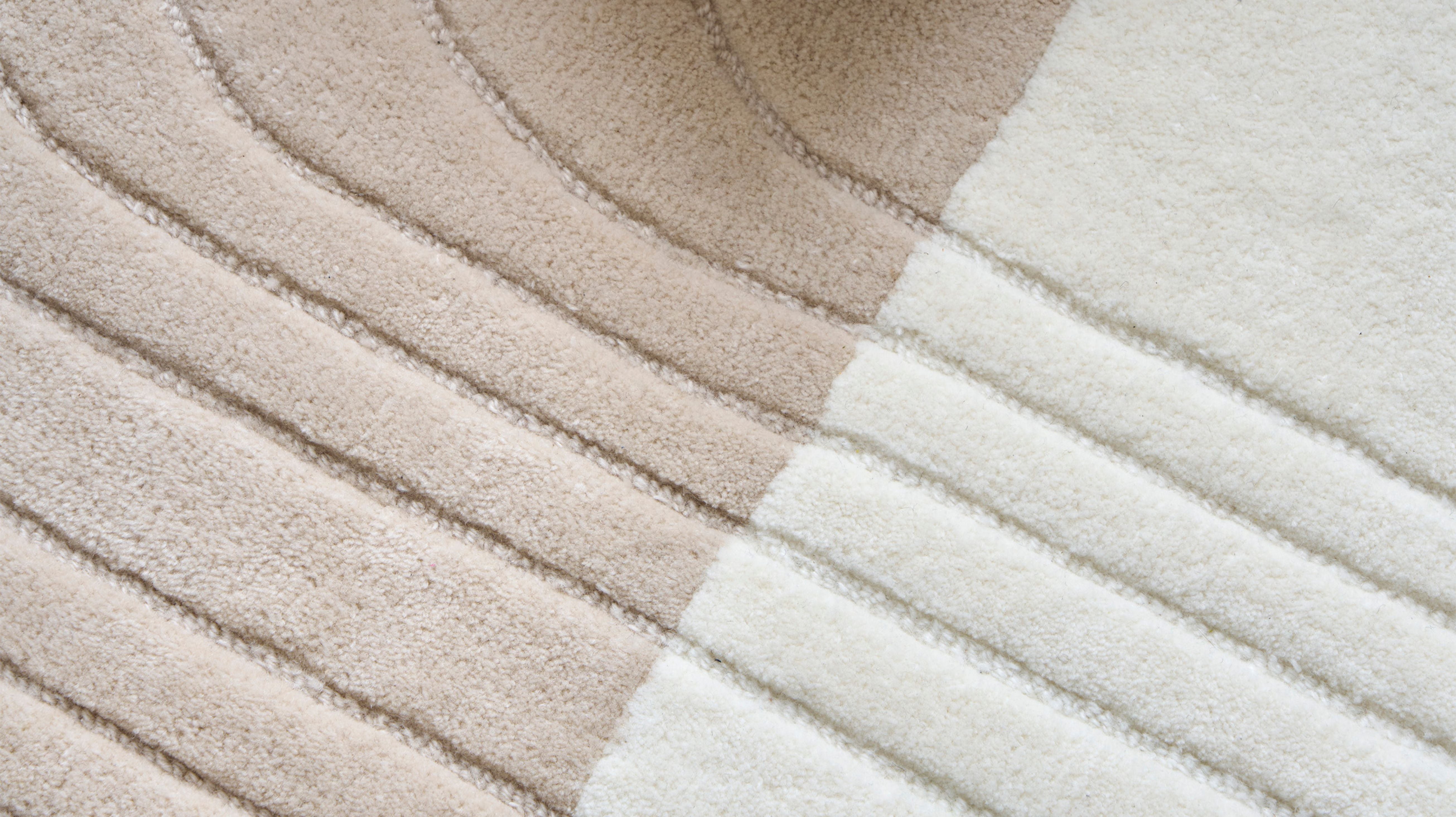
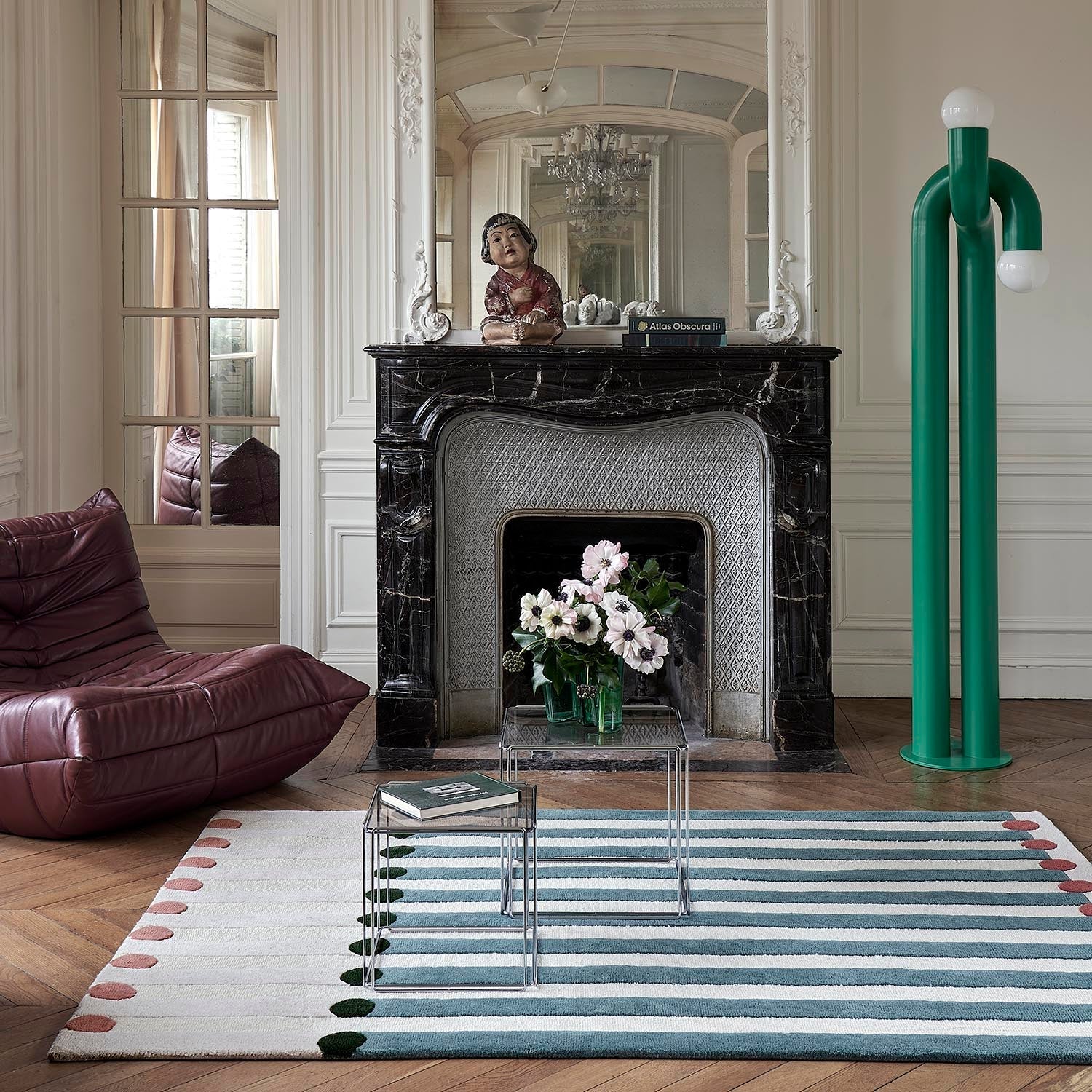
Ether wool rug , design Edito x Piergil Fourquié
The hand-tufted wool rug
The making of a hand-tufted wool rug is a craft process that allows for the production of quality rugs, while offering a wide variety of patterns and textures.
To begin, a sturdy backdrop is stretched over a large wooden frame. This frame keeps the backdrop taut and makes the artisan's work easier. The backdrop will serve as a base for inserting the wool fibers.
Next, a design is drawn directly onto the canvas, either by hand or by transfer, following a pre-existing model. This drawing serves as a guide for the artisan, who can then follow the desired shapes and colors in the rug.
The main tool for manual tufting is the tufting gun, a type of electric or manual gun designed to insert wool yarns through the fabric.
Once the pattern is fully created, the back of the rug (the side where the wool threads are threaded) is coated with an adhesive. This coating sticks the threads together and holds them securely in place.
Once the adhesive is dry, a finishing layer is added to the back of the rug. This final layer, often made of cotton or synthetic fabric, protects the rug and gives it a clean, finished look. It also reinforces the rug's overall structure, extending its lifespan.
Finally, the edges of the rug are cut and sometimes sewn to create a clean finish.

Mechanical Weaving
Mechanical carpet weaving is an automated industrial process that allows carpets to be produced efficiently, in large quantities and with precise patterns.
Selection of raw materials and preparation of the yarn
- The fibers used in mechanical weaving can be natural (such as wool, cotton, or silk) or synthetic (such as nylon, polyester, or polypropylene).
- The yarns are selected based on texture, strength, color, and durability.
- The threads are wound onto bobbins and placed on the loom. They pass through guides and tensioning devices to ensure even tension.
- If necessary, the yarns can be dyed before weaving to obtain specific colors.
Mechanical carpet weaving allows for the production of varied patterns, specific textures and high resistance, at competitive prices compared to hand weaving.
The Handwoven Jute Rug
Handwoven jute rugs are made from natural fibers.
The jute fibers are dried, then spun manually or mechanically to form yarns. These yarns can be more or less thick depending on the desired texture of the rug.
The jute yarn is then prepared for weaving. This often involves dyeing it (if specific colors are required) and winding it onto bobbins to facilitate the weaving process.
Jute rugs are typically woven by hand on a traditional loom. Artisans alternate horizontal (weft) and vertical (warp) threads to create a variety of patterns and textures. The weave can be very tight or looser depending on the rug's design. Several weaving techniques exist, such as flatweave and loop weaving.
Once the rug is woven, the edges are usually sewn or reinforced to prevent fraying. Some rugs may also be treated with products to improve their durability and moisture resistance. Decorative patterns or embroidery may also be added to further personalize the rug's design.
After manufacturing, the rugs are dried, often in the open air, and then cleaned to remove any dirt or manufacturing residue. Cleaning may also include brushing to soften the fibers.
Jute rugs are prized for their natural look and durability. They are often used in bohemian, natural, or rustic style decors due to their rough texture and earthy color.

Comparison of Methods
The choice of manufacturing method depends on the intended use, budget, and style preferences. Hand-knotted rugs remain unrivaled for their quality and longevity, perfect for those seeking a timeless piece of art. Wool tufting is ideal for custom designs and a soft texture, while remaining affordable. Machine weaving, on the other hand, is an economical option well-suited to any decorating project. Finally, handwoven jute rugs are perfect for complementing a natural decor.