Why has the rug once again become central to interior design projects?
Long considered a mere decorative accessory, the rug has regained a central place in contemporary interior design. Today, architects and decorators use it as a tool for structuring living spaces , providing comfort, and creating visual balance in interior design. This resurgence is not a passing fad, but rather a response to a new way of living and designing interior spaces.
The rug as a structuring element of the space
In contemporary interiors, often open-plan, with no partitions and plenty of light — the question of defining spaces has become central. Where walls disappear, rugs take over.
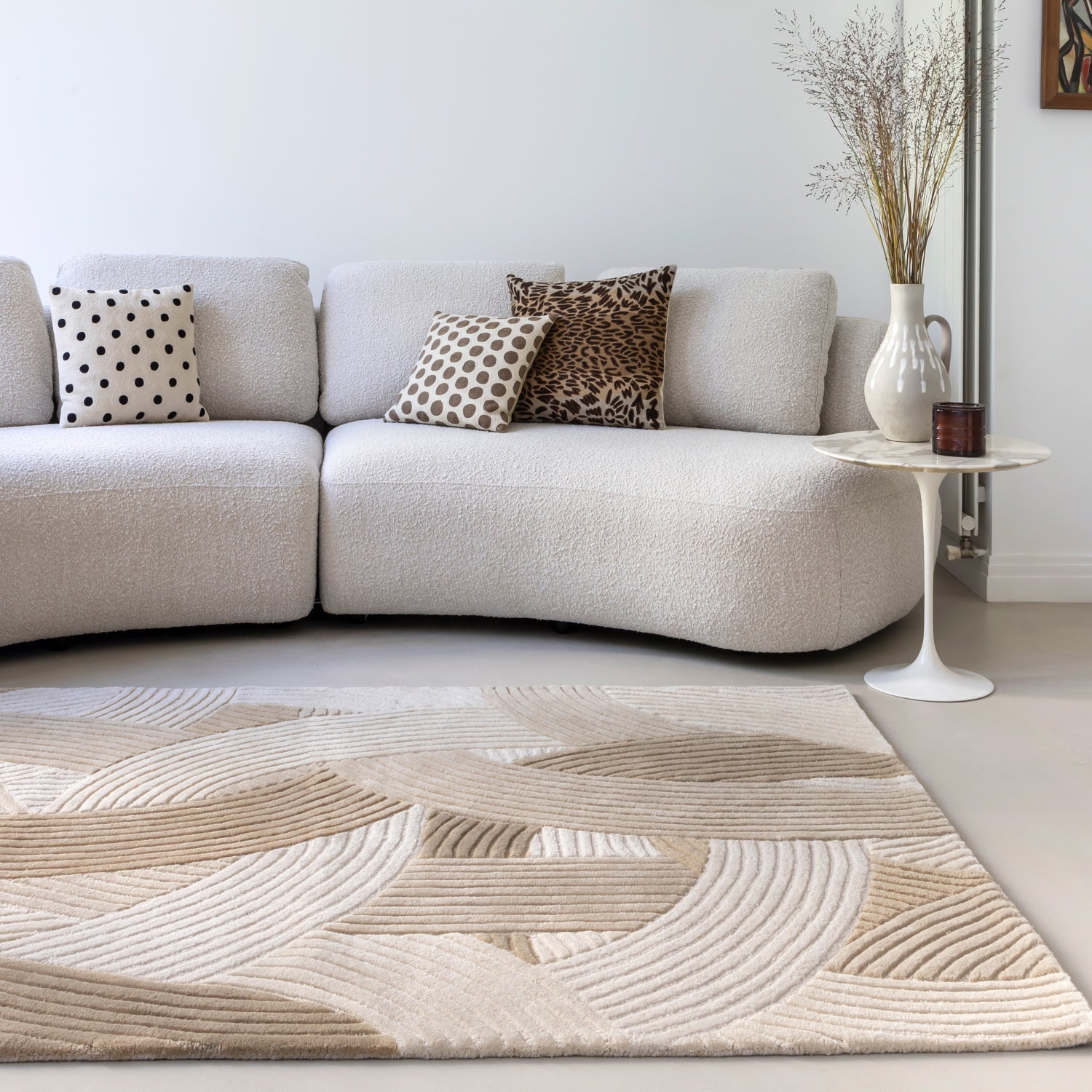
A large-format rug can visually define a living room in a living space, create a dining area without partitioning, and organize an office space in a living room.
Interior designers use rugs as a soft boundary , structuring without confining. Unlike physical partitions, they preserve circulation, light, and the fluidity of the space. The rug is one of the finishing touches that complete a decoration.
A response to new lifestyles
Habits have changed: we work from home, we entertain differently, and we seek more comfort in our daily lives. Rugs reflect these transformations in our decor.
In interior design projects, rugs can make a space feel warmer, improve walking comfort, and absorb noise in large areas. Furthermore, rugs create a cozy and inviting atmosphere.
In urban apartments as well as in contemporary houses, carpets help to create living spaces that are more livable , softer, and more functional.
This is also why architects today favour wool carpets , known for their comfort, durability and acoustic qualities.

The return of large formats and custom-made rugs
Another strong marker of this revival: the rise of XXL and custom-made rugs in architects' projects.
Standard living room rug sizes are no longer sufficient to meet the constraints of contemporary spaces such as large open living rooms, rooms with atypical proportions, or renovated old architecture.
A custom-made rug allows for precise adaptation of dimensions to the architectural project. It no longer simply "furnishes" a space, but rather complements it in its exact proportions .
For interior designers, custom-made has become a real tool in decoration, just like furniture or lighting.
The carpet as a fully-fledged architectural surface
In a more conceptual approach, the carpet is now considered an active surface , just like the walls or the ceiling. Some designers even refer to the floor as the fifth wall .
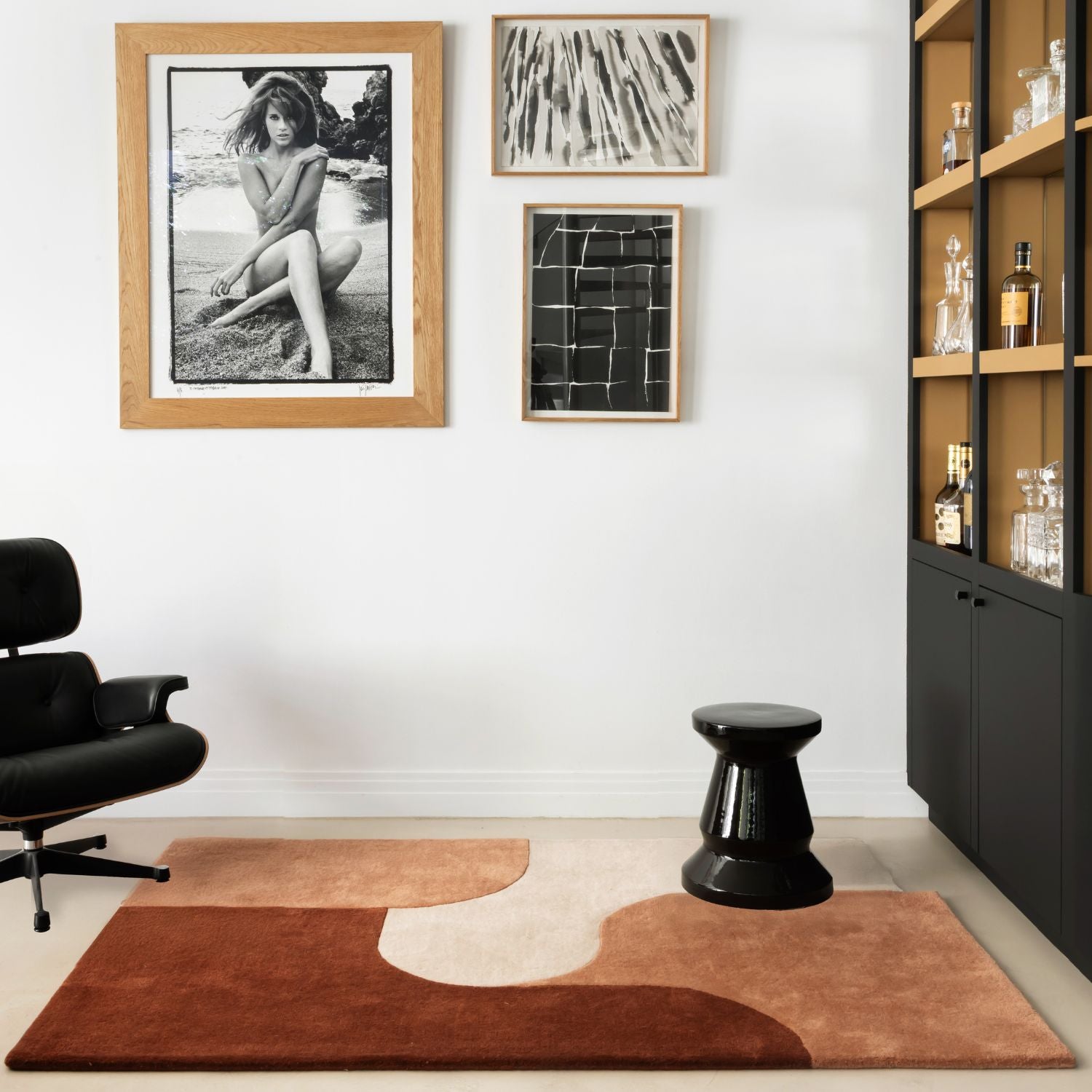
In architects' projects, the rug interacts with the volumes, it balances the materials (wood, stone, metal) and it participates in the overall composition of the space.
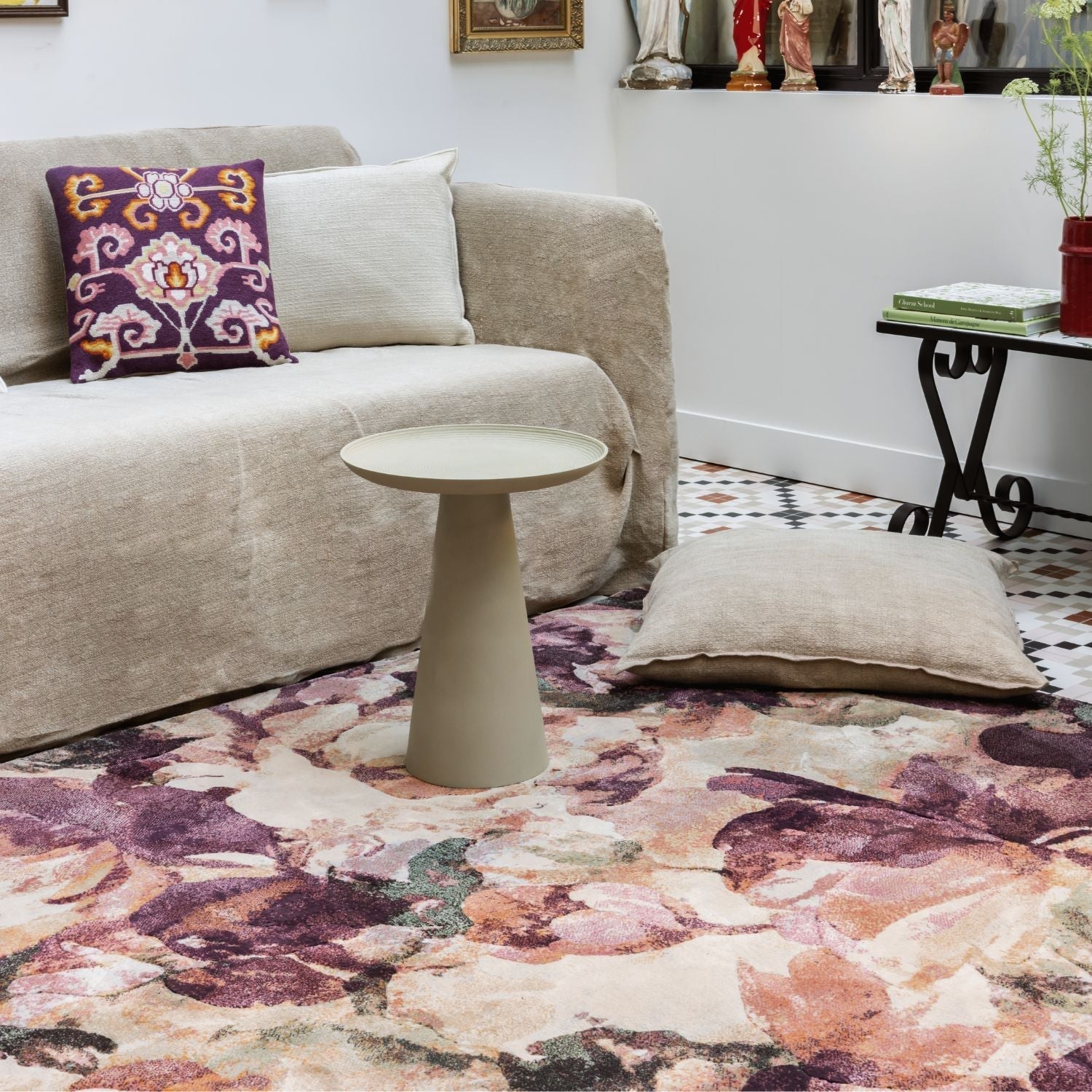
The choices often fall on rugs with simple patterns and textured finishes, capable of adding depth without visually overloading the interior.
A more understated, more sustainable aesthetic
This resurgence of the rug is also part of a broader trend: fewer objects, but better chosen . Architects favor minimalist interiors, where each element has a specific role.
Rather than multiplying decorative accessories, the rug becomes a centerpiece, a durable element and a long-term aesthetic investment.
In this logic, the carpet is no longer an interchangeable element, but an essential component of the design project.
Why architects can no longer do without carpets today
If carpets have once again become central to interior design projects, it's because they address several key issues. Carpets structure open spaces, improve comfort and acoustics, complement architectural volumes, and bring warmth and visual balance.
Far from being a mere accessory, it is now considered from the earliest stages of the project, just like the materials, the light or the furniture. The rug complements the sofa and clarifies the room's layout. Combined with various decorative objects, the rug adds rhythm to the interior.

Conclusion
The rug has become the centerpiece of interior design. Thanks to large formats, custom sizes, and a more architectural approach to flooring, it is regaining a central role in the design of contemporary spaces.
In a well-designed interior, the rug does not "decorate": it structures, connects and reveals the living space .